The problem
A sustainable DTC fashion brand in the US selling men's, women's and unisex apparel. Prior to our involvement the brand was relying on a basic Google Ads structure that left performance on the table.
- Product feed was poorly optimised: titles and descriptions lacked relevant, high-intent keywords
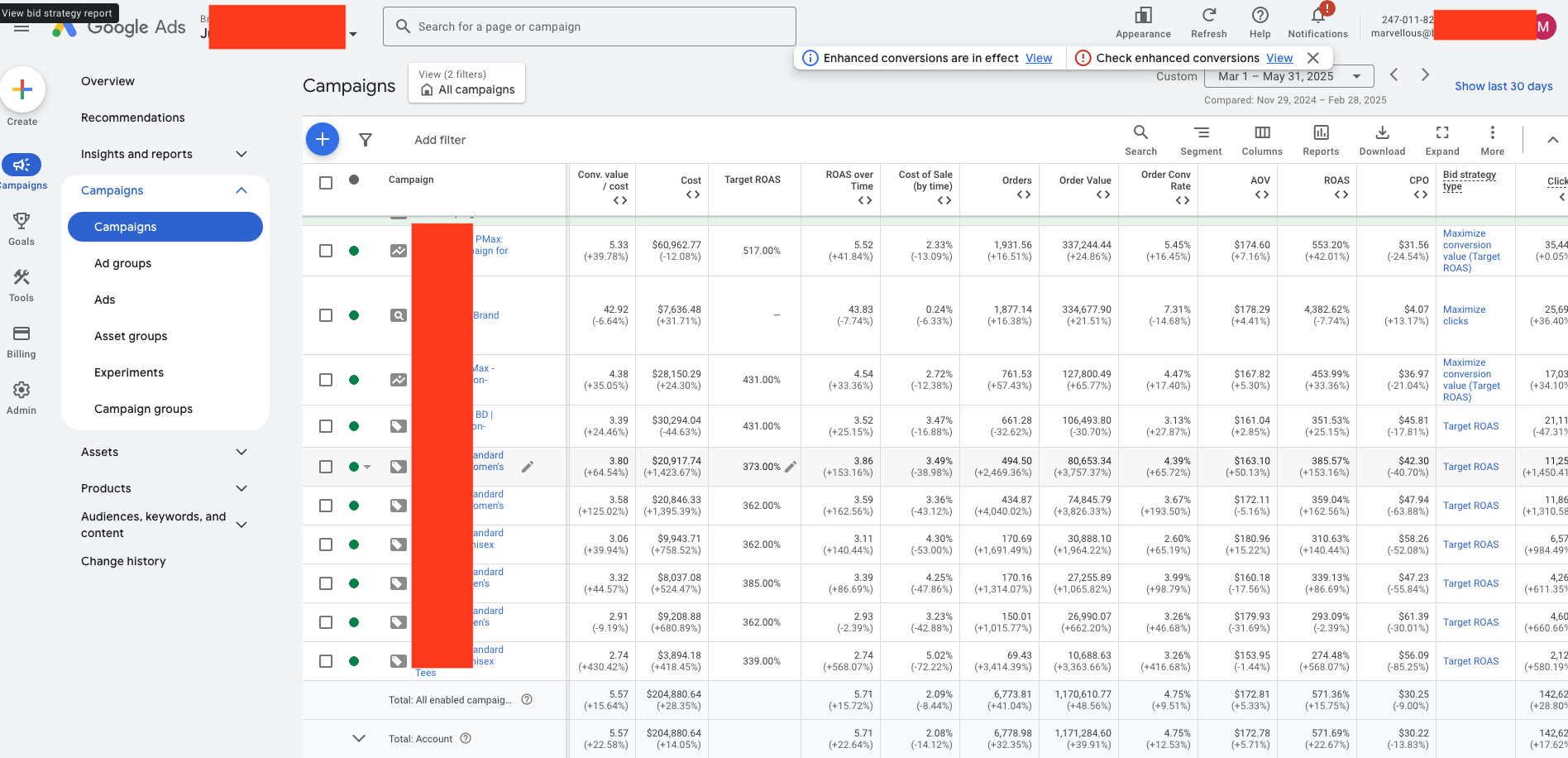
- Existing setup: PMax across all products (mostly converting on brand), PMax for non-brand (most products got no traffic), and a basic brand search campaign
- Low-performing product SKUs wasting spend while high-potential products got zero visibility
What we did
Feed optimisation via DataFeedWatch
- Conducted keyword research and rewrote all product titles and descriptions with high-traffic, relevant search terms
Campaign restructure
- Segmented products into new Standard Shopping campaigns by gender (men's, women's, unisex)
- Created separate campaigns for non-tees vs tees for better bidding control
- Maintained existing PMax campaigns for scale
Traffic quality strategy
- Ensured non-brand product traffic was pushed to the new Shopping campaigns
- Let main PMax benefit from higher-quality audience signals
The outcome
| Metric | 3 Months Before | 3 Months After | Change |
|---|---|---|---|
| Orders | ~2,000 (combined) | 6,779 | +239%+ |
| Order Value | ~$400k | $1.17M+ | +193%+ |
| ROAS (Total Account) | ~4.0x | 5.71x | +43% |
| AOV | ~$160–170 | $172.78 | Marginal lift |
| Order Conversion Rate | ~3.5% | 4.75% | +36% |
What we learned
- Order value grew from ~$400k to $1.17M+
- PMax benefitted from the improved feed structure, helping push both brand and non-brand performance
Performance screenshots